
Machu Picchu: History, Tickets, Circuits and How to Get There


On this page
By the Machu Picchu News editorial team. Last updated: August 2026.
Our travel information is reviewed using current regulations from Peru’s Ministry of Culture and official archaeological sources.
Quick Answers
- What is Machu Picchu? The most important ancient Inca llaqta in Peru, declared a UNESCO World Heritage Site in 1983.
- Where is it? In the Cusco region of Peru, at approximately 2,430 meters (7,970 ft) above sea level.
- When was it built? During the 15th century. Radiocarbon studies place occupation from approximately 1420.
- How many circuits are there? Three Panoramic, Classic and Royalty with a total of 10 routes.
- Where to buy tickets? On the official Ministry of Culture platform: tuboleto.cultura.pe
What Is Machu Picchu?
Machu Picchu is the most recognized archaeological site in Peru and one of South America’s greatest cultural symbols. UNESCO highlights its exceptional combination of urban planning, architecture, engineering and adaptation to the Andean landscape a masterpiece that integrates terraces, temples, plazas, water channels and residential complexes into a steeply sloped mountain.
More than a simple set of ruins, Machu Picchu is a llaqta: an organized Inca state settlement. The complex contains approximately 200 structures linked to religious, ceremonial, agricultural and everyday functions, all arranged within a spatial organization that continues to impress modern researchers.

What Does Machu Picchu Mean?
The name Machu Picchu comes from Quechua: machu means «old» or «ancient,» and picchu refers to a mountain peak. The most common translation is «old mountain».
This name makes particular sense when contrasted with Huayna Picchu (or Wayna Picchu) the famous peak rising behind the complex in most iconic photographs whose name means precisely the opposite: «young mountain».
Where Is Machu Picchu and How High Is It?
Machu Picchu is located in the Cusco region of Peru, within the Historic Sanctuary of Machu Picchu, at a spectacular meeting point between the Andes and the Amazon basin. The Urubamba River surrounds the mountain, creating one of the most dramatic landscapes on the continent.
The altitude of Machu Picchu is approximately 2,430 meters (7,970 feet) above sea level, according to UNESCO considerably lower than the city of Cusco, which exceeds 3,400 m (11,150 ft). For this reason, many travelers feel the effects of altitude less at Machu Picchu than during their first days in Cusco.
| Location | Approximate Altitude |
| Machupicchu Pueblo / Aguas Calientes | ~2,040 meters above sea level / 6,690 ft |
| Machu Picchu (archaeological site) | 2,430 meters above sea level / 7,970 ft |
| Machu Picchu Mountain (summit) | 3,082 meters above sea level / 10,111 ft |
| Huayna Picchu (summit) | 2,693 meters above sea level / 8,835 ft |
| Cusco | 3,400 meters above sea level / 11,150 ft |
History of Machu Picchu
Origins and Construction
Machu Picchu belongs to the expansion period of the Inca State during the 15th century. Traditional chronology associates its construction with the reign of Pachacutec Inca Yupanqui, the ruler who transformed Cusco into the capital of a vast empire, placing the start of construction between 1450 and 1460.
However, more recent research using radiocarbon dating, published in the journal Antiquity, found evidence of occupation from approximately 1420 moving the start of activity earlier than the traditional historical chronology. This does not eliminate the link between Pachacutec and Machu Picchu; it demonstrates that the site’s history continues to evolve as new scientific evidence emerges.
Building Machu Picchu represented an enormous engineering challenge: the Incas had to adapt structures to a mountain with steep slopes, heavy rainfall and complex geological conditions. They developed a sophisticated system of terraces to manage the slopes, channels to handle water drainage, and stone masonry of extraordinary precision that required no mortar in its finest joints.

Why Was Machu Picchu Built?
The question of Machu Picchu’s original function continues to generate academic debate. UNESCO describes the complex as an important center with religious, ceremonial, astronomical and agricultural components. Other research interprets it as a royal estate linked to Pachacutec, housing the Inca elite and state specialists.
The most accurate understanding is as a multi-functional complex: residential spaces, agricultural areas, ceremonial buildings, plazas, fountains and pathways coexist within an integrated design that reflects the Andean worldview, where architecture, nature and spirituality form an indivisible whole.
Why Was Machu Picchu Abandoned?
Machu Picchu was abandoned during the 16th century, in the context of the collapse of the Inca Empire following the Spanish conquest. The Decentralized Directorate of Culture of Cusco places the abandonment in the second half of that century.
Machu Picchu Was Never Really Lost
This is one of the most important points for telling the site’s history accurately. The Decentralized Directorate of Culture of Cusco states explicitly that Machu Picchu was never lost: it was visited and occasionally inhabited after its formal abandonment.
There is cartographic evidence predating 1911: in 1874, engineer Herman Göhring produced a map bearing the toponyms Machu Picchu and Huayna Picchu. MINCETUR also notes that Agustín Lizárraga knew the site around 1901 a decade before Bingham ‘s arrival.
Hiram Bingham and 1911
Hiram Bingham III arrived at Machu Picchu on July 24, 1911, during a scientific expedition. His visit did not happen in isolation: local resident Melchor Arteaga guided him to the site.
What Bingham did was document, photograph, research and publish the site to the international scientific community, decisively raising worldwide awareness. The historically accurate formulation: Bingham contributed to scientifically documenting Machu Picchu and giving it international reach; he was not the first to know about it, but the first to publicize it globally with scientific backing.
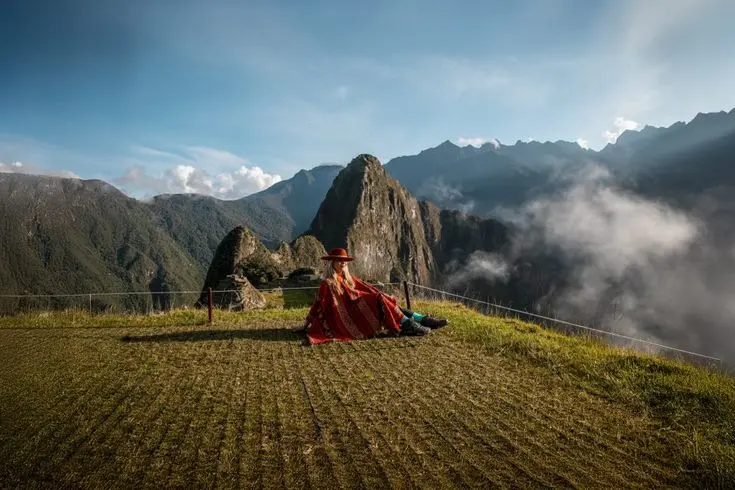
Machu Picchu as a UNESCO World Heritage Site
The Historic Sanctuary of Machu Picchu was inscribed on the UNESCO World Heritage List in 1983, for both its exceptional cultural and natural values. The protected area extends well beyond the ruins: it encompasses mountains, valleys, cloud forests, secondary archaeological sites and extraordinary biodiversity resulting from its transitional location between the Andes and the Amazon.
Key Archaeological Areas
| Attraction | Why It Matters |
| Temple of the Sun | High-precision masonry, associated with solar worship |
| Temple of the Three Windows | Iconic trapezoidal Inca architecture at the Sacred Plaza |
| Intihuatana | Ritual stone linked to the Inca solar calendar |
| Sacred Rock | Monolith replicating the silhouette of the Yanantin mountain |
| Agricultural terraces | Slope management, drainage and food production |
| Water channels and fountains | Hydraulic system integrated into the urban design |
| Sacred Plaza | Ceremonial heart of the complex |
Access to specific areas depends on the circuit and route included in your ticket.
Machu Picchu Circuits 2026
Since June 2024, the official access system has operated through three circuits and 10 routes. Purchasing a generic «general ticket» no longer accurately describes the planning required; each ticket specifies a date, entry time, circuit and route.
Circuit 1: Panoramic Machu Picchu
Focused on elevated sectors and panoramic views. Includes Machu Picchu Mountain (Route 1-A) and Intipunku / Sun Gate (Route 1-C, high season only). Best suited for photography and landscape-focused visitors.
Circuit 2: Classic Machu Picchu
The most sought-after experience for first-time visitors. Covers the main archaeological sectors and most representative structures of the llaqta. Routes 2-A and 2-B.
Circuit 3: Machu Picchu Royalty
Provides access to lower sectors and additional routes during high season. Includes the Huayna Picchu hike (Route 3-A) extremely limited availability at 400 visitors per day and other options such as the Great Cavern.
August 2026 update: Route 3-A (Waynapicchu / Huayna Picchu) was temporarily closed for conservation and maintenance work and reopened on July 1, 2026, subject to official confirmation. Always verify current access status at machupicchu.gob.pe before planning your visit.
Machu Picchu Tickets 2026: How to Buy
Tickets are purchased exclusively through tuboleto.cultura.pe the official platform of Peru’s Ministry of Culture. When registering, you must select: circuit, route, date, entry time and your identification document (national ID, residency card or passport).
The golden rule: confirm your ticket before purchasing any non-refundable transport, hotels or other services. The most popular circuits and Huayna Picchu can sell out weeks in advance during high season (June to September).
Peru’s Ministry of Culture also offers up to 1,000 tickets per day for in-person purchase in Machupicchu Pueblo, valid for the following day. However, this is not a reliable strategy during peak travel periods.
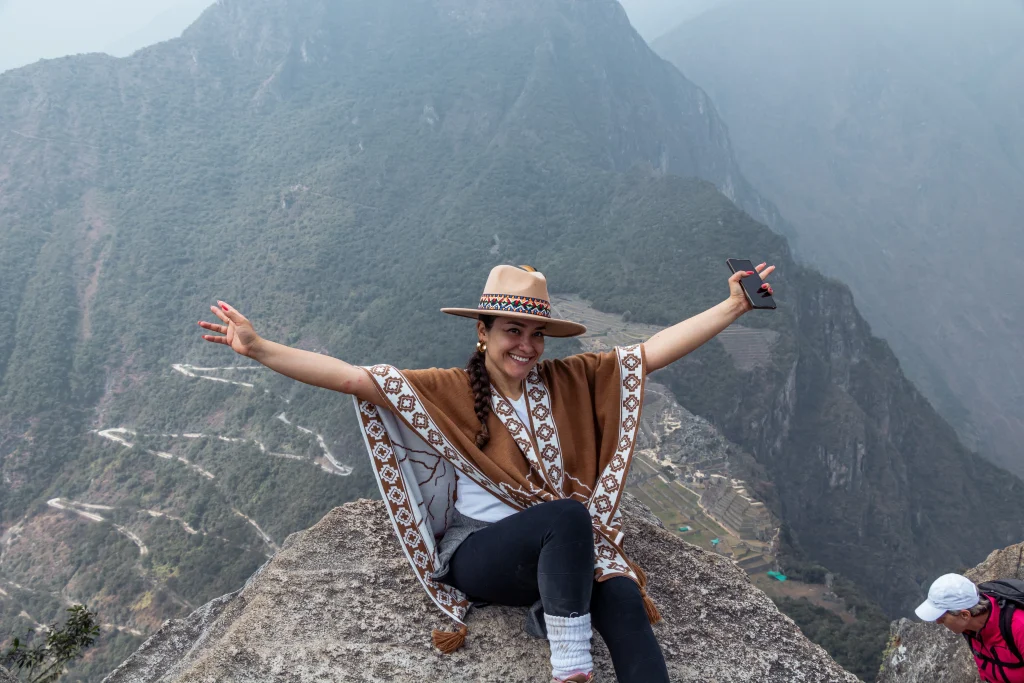
How to Get to Machu Picchu
There is no direct road from Cusco to Machu Picchu. The standard route combines several stages:
1. Lima → Cusco Most international visitors fly from Lima to Cusco (approximately 1 hour by domestic flight). Overland transport is also available but takes many hours.
2. Cusco → Ollantaytambo Road transfer through the Sacred Valley (1.5–2 hours). Many travelers use this leg to visit Pisac, Chinchero or the salt terraces at Maras.
3. Ollantaytambo → Machupicchu Pueblo (by train) The train follows the Urubamba River valley through different ecosystems to Aguas Calientes.
4. Machupicchu Pueblo → Machu Picchu Shuttle buses travel the Hiram Bingham road to the entrance (~25–30 minutes). Fit travelers can also hike up (~1.5 hours of steep climbing).
Trains to Machu Picchu
| Service | Level | Best For |
| Expedition | Standard | Budget-focused travelers |
| Vistadome | Comfort | Panoramic windows and scenic experience |
| Vistadome Observatory | Premium | Glass-domed ceilings for extended views |
| Hiram Bingham | Luxury | Gourmet dining, entertainment and exclusive service |
Trekking Routes to Machu Picchu
The train is not the only way to arrive. Travelers with time and interest in hiking can choose from:
- Classic Inca Trail (4 days): the most famous historical route. Combines Inca roads, archaeological sites and diverse ecosystems before arriving at Intipunku (Sun Gate) with the first view of Machu Picchu at sunrise. Permits are strictly limited book months in advance.
- Short Inca Trail (2 days): a more accessible alternative for those with limited time, covering the final historic stretch.
- Salkantay Trek (5 days): combines high-altitude mountains, ecosystem changes and spectacular landscapes, connecting with transport to Aguas Calientes in the final days.
Huayna Picchu vs Machu Picchu Mountain
Two of the most searched hiking options compared:
| Feature | Huayna Picchu | Machu Picchu Mountain |
| Summit altitude | ~2,693 m / 8,835 ft | ~3,082 m / 10,111 ft |
| Difficulty | High (Death Stairs) | Moderate-high (long ascent) |
| Daily capacity | 400 visitors | Higher availability |
| Views | Directly over the archaeological site | Wide panoramic views |
| Official circuit 2026 | Route 3-A, Circuit 3 | Route 1-A, Circuit 1 |
| Suitable for vertigo | Not recommended | More suitable |
| Ideal for | Adventure and dramatic vertical views | Panoramic scenery without extreme exposure |
Best Time to Visit Machu Picchu
There is no universally perfect month it depends on your priorities:
| Period | Conditions | Best For |
| May–September | Generally drier, higher tourist demand | Trekking, photography with clear skies |
| October–November | Transitional, variable skies | Fewer crowds, balanced conditions |
| December–March | More rainfall, very lush greenery | Verdant landscapes, lower visitor numbers |
| April | Transition toward dry season | Good intermediate option |
Mountain weather can never be guaranteed completely. Even during the dry season, mist and brief rain showers can occur.
How Many Days Do You Need?
- One day: possible but involves a very long journey from Cusco with little time to enjoy the site.
- Two days: overnight in Aguas Calientes and a relaxed visit the following morning the most recommended option for most travelers.
- Three days: combines the archaeological visit with the Sacred Valley, Ollantaytambo and other attractions without rushing.
What to Pack for Machu Picchu
- Identification document used to purchase your ticket
- Comfortable walking shoes with good grip (uneven terrain, potentially wet)
- Sunscreen and hat (UV radiation is high at this altitude)
- Light waterproof jacket (weather can change quickly)
- Water, according to current site regulations
- Small permitted daypack
- Personal medications
Check current official regulations before traveling permitted items can be updated.
Responsible Tourism at Machu Picchu
Machu Picchu receives millions of visitors every year. Its conservation depends on each visitor’s behavior:
- Always follow official circuits, paths and signage
- Do not enter restricted areas or climb walls and structures
- Do not touch or remove stones, plants or archaeological elements
- Avoid leaving waste there are no rubbish bins inside the site
- Follow the instructions of park staff and guides
Conservation ensures that future generations can continue to experience this extraordinary heritage.
Frequently Asked Questions
What is Machu Picchu?
The most important ancient Inca llaqta in Peru, built in the 15th century in the Cusco region, declared a UNESCO World Heritage Site in 1983.
How high is Machu Picchu?
Approximately 2,430 meters (7,970 feet) above sea level, according to UNESCO.
When was Machu Picchu built?
During the 15th century. Radiocarbon studies find evidence of occupation from approximately 1420.
Who built Machu Picchu?
The Inca State during the period associated with Pachacutec Inca Yupanqui.
Why was Machu Picchu abandoned?
During the 16th century, in the context of the Inca Empire’s collapse following the Spanish conquest.
Was Machu Picchu really lost?
No. It was visited and occasionally inhabited after its formal abandonment. Cartographic records exist from 1874, and local farmer Agustín Lizárraga knew the site around 1901.
Did Hiram Bingham discover Machu Picchu?
Bingham arrived in 1911 with local assistance and contributed decisively to the site’s scientific documentation and international recognition. Local communities already knew about it.
How many circuits does Machu Picchu have in 2026?
Three circuits and 10 routes, in place since June 2024.
Where can I buy Machu Picchu tickets?
At tuboleto.cultura.pe, the official platform of Peru’s Ministry of Culture.
What is the best time to visit Machu Picchu?
May to September offers generally drier conditions. April and October are good transitional options. December to March brings lush green landscapes and lower visitor numbers.
Can Machu Picchu be visited in one day?
Yes, but it involves a very long journey. Two days with an overnight stay in Aguas Calientes offers a more comfortable pace.
Keep Reading at Machu Picchu News
Machu Picchu News continues exploring every aspect of the Inca citadel with specialized, updated guides: 2026 tickets and circuits, Huayna Picchu complete guide, Inca Trail planning, train comparisons, seasonal weather and the latest archaeology news.
To plan your complete Peru journey Cusco, Sacred Valley, Humantay Lake, Rainbow Mountain and more visit Machu Picchu Peru Tours.

